Home / History
Seven centuries
of Lübbenow
First a knightly estate, then an artists’ salon, almost a ruin, then a school for fifty-four years. The history of this house is remarkably unceremonious.
1301
A name in a document from Anklam
Lübbenow appears in the records for the first time in 1301, where a Hermannus de Lubbenow is listed as a consul in Anklam. The village already existed; for centuries the estate shaped it more than the farmers living beside it.
The present building began in 1738 as a baroque house. The form still visible today came only in the 19th century.
1812 bis 1826
The von Stülpnagel family rebuild
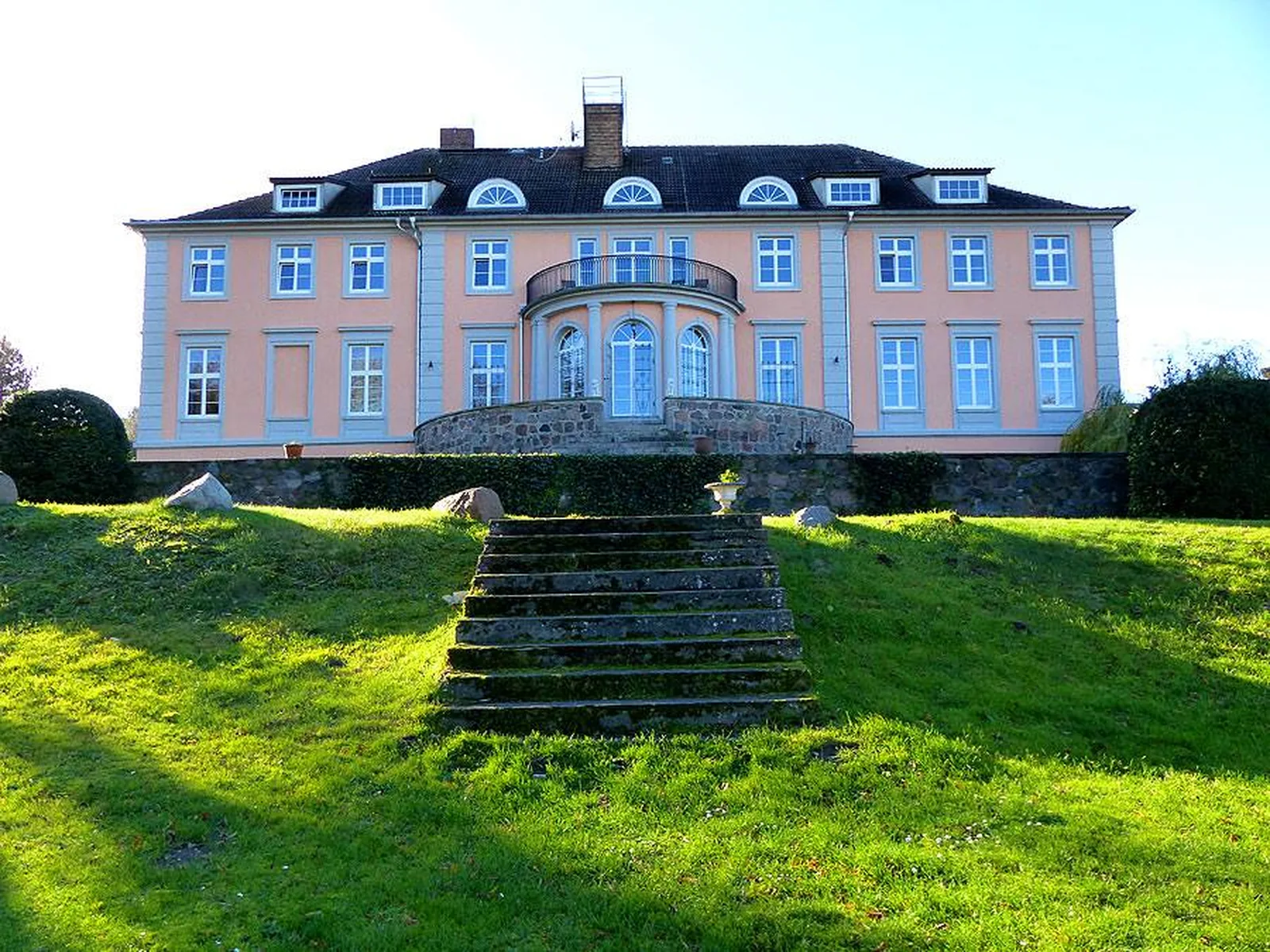
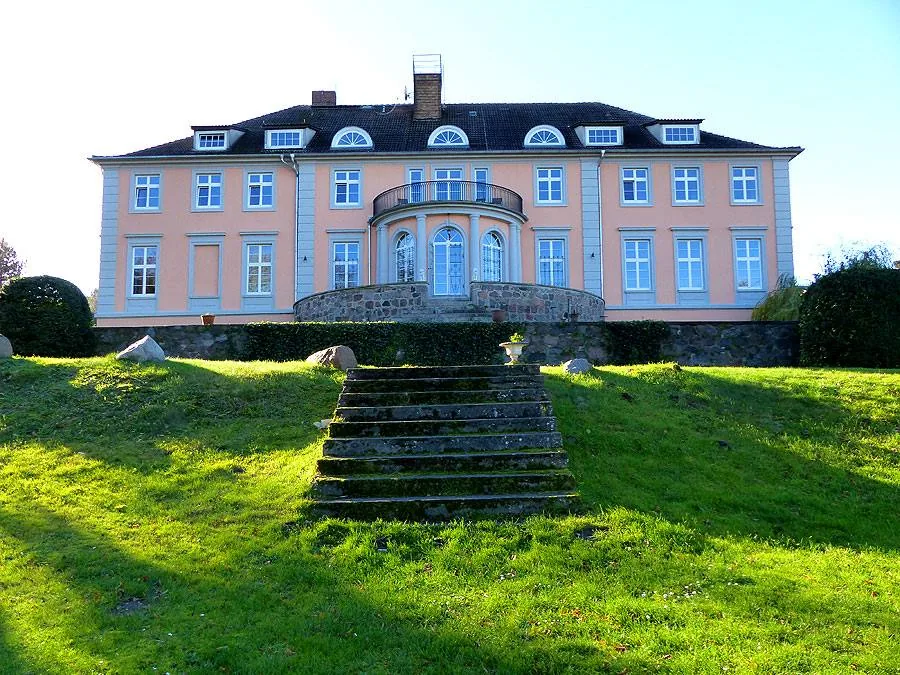
Unter der Familie von Stülpnagel, später von Stülpnagel-Dargitz, wurde aus dem Barockhaus ein Vertreter des ländlichen preußischen Klassizismus. Zweigeschossig, verputzter Ziegel, neun Fensterachsen, dazu ein durchfenstertes Sockelgeschoss und ein Walmdach.
Der Mittelrisalit trägt Spitzbogenportale und kreisrunde Fensteröffnungen. Diese Formen tauchen im ganzen Haus wieder auf, in Türbögen, in den Fächerfenstern der Dachgauben, in der Halle.
Between 1923 and 1927 Wolff and Alexander von Stülpnagel extended the building considerably. That is when the semicircular lake terrace was built, leading straight into the park and down to the shore.
Die 1920er
When Berlin came to Lübbenow
A lady of Berlin society turned the manor house into an artists’ salon known far beyond the Uckermark. Writers, painters and intellectuals met here.
Mai 1945: die verhinderte Sprengung
The Red Army had already prepared to blow up the building. It was the villagers themselves who protested loudly and prevailed. A few weeks later the first refugees moved in.
1951 bis 2004: Schulhaus
For more than five decades the manor house held a comprehensive school. The sports hall that belongs to the holiday property today dates from that time. Lessons ended with the 2004 school year.
2005 bis 2007: Sanierung
After reunification the estate was privatised and then refurbished in keeping with its listed status. The present bathrooms, the large kitchen and the spa annexe were created then. In 2012 the façade was renewed. Locally the house is also called Schloss Lübbenow.
Figures from the German Empire
Estate district versus village
For a long time two communities lived side by side in Lübbenow: the knightly estate and the small civil parish. The censuses show how unequal the balance was.
| Census year | Civil parish | Estate district | Total | What lies behind it |
|---|---|---|---|---|
| 1871 | 33 | 200 | 233 | Five houses make up the village; 36 households belong to the estate. |
| 1895 | 35 | 205 | 240 | The civil village stops growing. |
| around 1900 | dissolved | ca. 240 | ca. 240 | The parish is absorbed into the estate district. |
| 1928 | ca. 240 | dissolved | ca. 240 | The Prussian land reform reverses the balance. |
Figures from the Prussian censuses, rounded.
Today
A monument that is used
Houses this size rarely survive as museums. Lübbenow took the opposite route: it is lived in, cooked in, played in. Children run across the floorboards, there is dancing in the hall and balls fly in the gymnasium.
Wer sich für Baugeschichte interessiert, findet trotzdem genug: originale Türen, alte Beschläge, Stuck, die Empore im Saal und den Blick von der Seeterrasse, den schon die Stülpnagels hatten.